


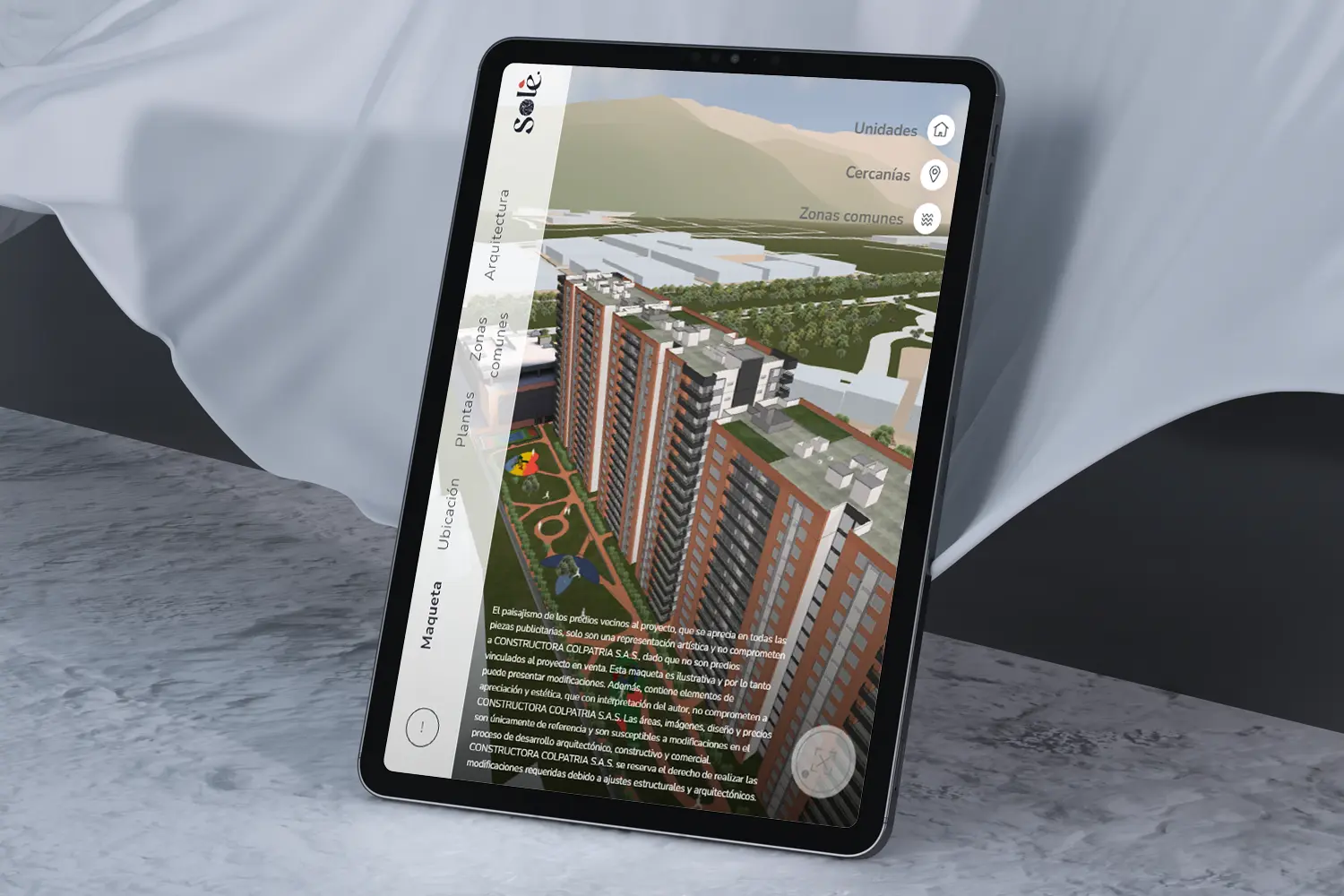
Digital transformation in the real estate sector is often understood as adopting new tools: a CRM, a new website, better renders. However, in practice, the real change happens when technology reorganizes how a project is sold, not just how it is presented.
In this sense, moving from isolated renders to interactive experiences is not an aesthetic evolution, but a shift in model.
The limits of renders as the main tool
Renders serve an important purpose: they help visualize a project. But when used as the core of digital marketing, clear limitations appear. Buyers see attractive images, but must imagine how they connect, what options exist, and how one unit compares to another.
This cognitive effort slows down the process and shifts the explanation to the sales team.
What changes when the experience becomes interactive
An interactive experience reorganizes information so buyers can:
- Explore the project at their own pace.
- Understand relationships between spaces, views, and layouts.
- Make preliminary decisions without direct assistance.
Technology does not replace the advisor, but it advances key stages of the buying process.
👉 This shift in approach is one of the pillars of immersive web experiences for construction and real estate companies.
Digital transformation as a process change, not just a channel shift
When a construction company adopts interactive experiences, the impact goes beyond marketing. It affects:
- How a lead is qualified.
- When sales intervenes.
- The quality of the commercial conversation.
That is why effective digital transformation does not happen when a new tool is added, but when marketing, experience, and sales align around the same digital asset.
A clear sign of digital maturity
A construction company reaches a higher level of digital maturity when its online presence no longer depends on external explanations to function. At that point, the website does not just display the project — it explains it, guiding buyers through key information in a clear and structured way.
This maturity is reflected when the digital experience:
- Allows understanding without intermediaries.
- Organizes information based on how buyers decide, not how the project was built.
- Integrates naturally with the sales process, without friction or rework.
When this happens, technology stops being a set of isolated tools and becomes commercial infrastructure. The website works continuously, filters leads better, and prepares the ground for higher-quality conversations. It is not about having more technology, but about using technology to sell better, with coherence and control.
Digital evolution
Ready to transform how you sell your projects?
Discover how to move forward with digitalization without losing commercial coherence.