


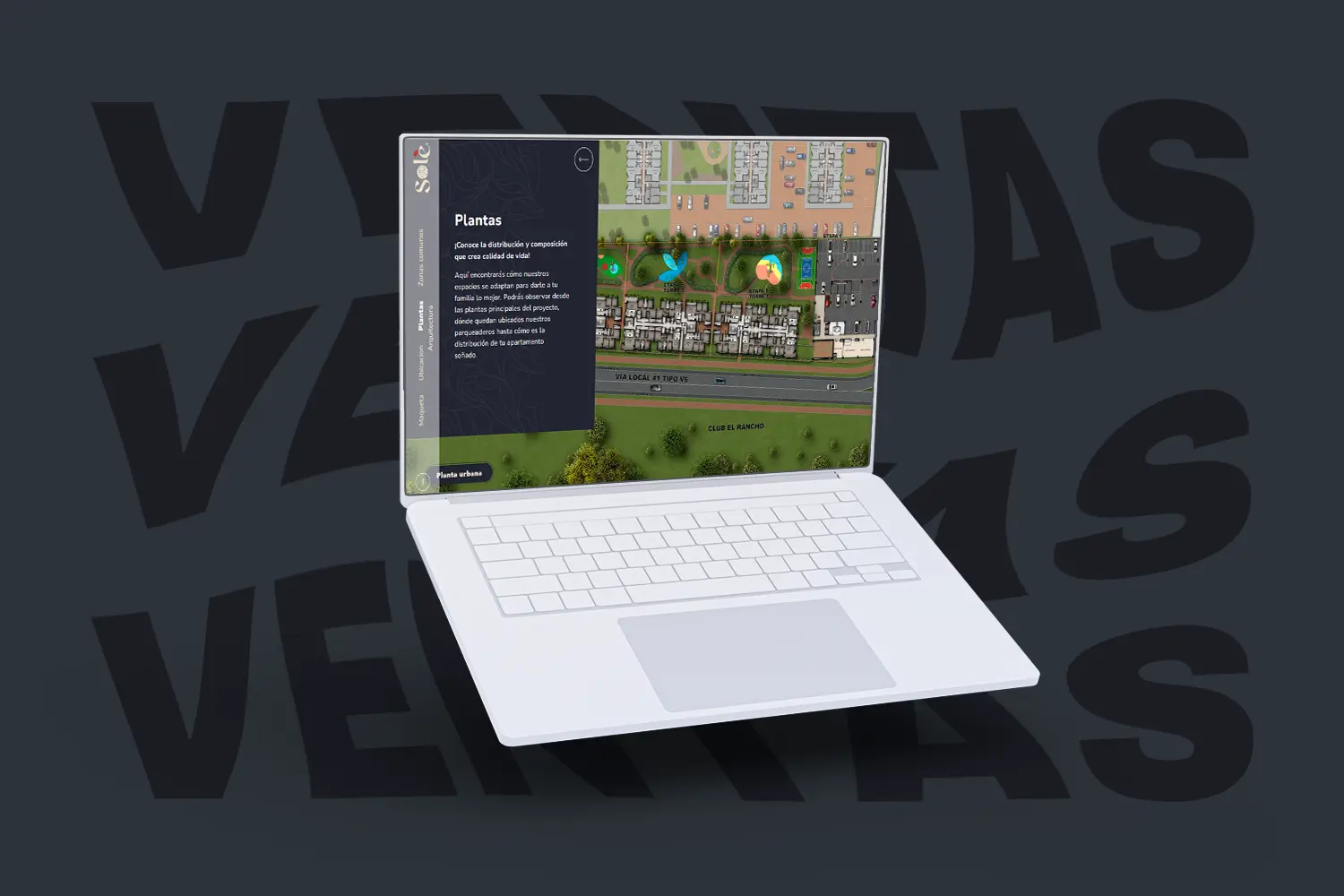
Many construction companies maintain traditional websites out of inertia, without evaluating whether they are still effective. Comparing both models helps explain why interactive websites are becoming the new industry standard.
Two approaches, two different outcomes
The difference between a traditional real estate website and an interactive one is not only in design or technology, but in the role the website plays within the sales process. The traditional model limits itself to informing and leaves most of the explanatory effort to the sales team. The interactive approach organizes information and experience so buyers can explore, compare, and understand the project before contacting sales.
The following table summarizes how these approaches generate different results throughout the decision process:
| Aspect | Traditional website | Interactive website |
|---|---|---|
| Role | Inform | Support decision |
| Visualization | Static | Immersive |
| Comparison | Limited | Intuitive |
| Advisor dependency | High | Lower |
| Impact on sales cycle | Low | High |
The difference is not only technological, but strategic.
This interactive model is part of the ecosystem described in the complete guide to immersive web experiences for construction and real estate companies.
Why interactive websites accelerate decisions
By allowing buyers to explore, compare, and understand independently, interactive websites reduce friction and prepare the ground for closing.
This effect is analyzed in depth in how an immersive real estate website reduces the sales cycle.
Comparative evaluation
Which model better drives your sales?
Schedule a demo and review both approaches applied to your specific project.